
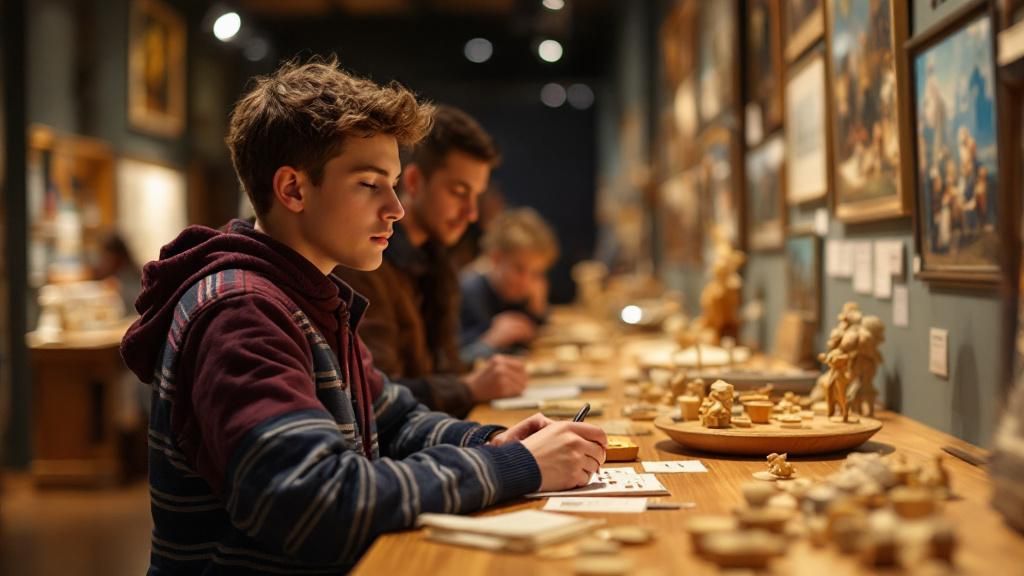
Britain’s premier museums are revolutionising how they engage with younger audiences, transcending standard presentations to deliver interactive and immersive experiences. From augmented reality installations to young people-led curatorial projects, these pioneering projects are reshaping historical collections into dynamic platforms for engagement and exploration. This article examines how leading institutions nationwide are reconceiving visitor engagement, making centuries-old artefacts appeal to digital-native audiences whilst fostering a genuine appreciation for the nation’s cultural heritage amongst the next generation.
Modern Technology Advancement and Engaging User Experiences
Britain’s major museums are utilising advanced digital technologies to engage younger visitors and revolutionise how historical collections are experienced. AR applications allow visitors to visualise artefacts in their authentic settings, whilst VR installations transport users through historical periods. Interactive touchscreens and mobile applications facilitate unguided discovery, promoting intellectual curiosity and involvement. These technological advancements democratise access to holdings, allowing remote audiences to experience exhibitions from home, considerably extending the museums’ scope beyond geographic limitations and established visiting habits.
Museums are actively partnering with technology companies and technology experts to develop custom solutions tailored specifically for younger demographics. Gamification elements, including progress badges and engaging tasks, motivate sustained engagement with collections. Social platform connectivity encourages visitors to share their discoveries, amplifying institutional reach organically. These innovations acknowledge that today’s younger audiences expect interactive, personalised experiences rather than simply watching. By embedding digital literacy within heritage education, museums position themselves as forward-thinking institutions that respect their audiences’ digital capabilities whilst maintaining rigorous curatorial standards and educational integrity.
School Collaborations and School Programmes
British museums have progressively recognised the value of building strong partnerships with learning organisations to incorporate historical knowledge within school curricula. Through collaborative initiatives, museums are working directly with teaching staff to develop tailored programmes that align with national learning benchmarks whilst enriching student learning. These collaborations give students to experience authentic objects and specialist-delivered workshops, converting abstract heritage themes into practical knowledge that resonate far more effectively than standard textbook learning alone.
Many institutions have created dedicated school liaison teams that design tailored programmes and curated visits catering to specific age groups and educational standards. These programmes often include hands-on activities, engaging storytelling, and backstage access to collections, allowing learners to build evaluative competencies whilst discovering their cultural heritage. Museums have found that such experiential learning substantially boost student engagement and cultivate deeper connections with historical narratives, ultimately nurturing a more informed and culturally aware generation of British citizens.
The success of these educational partnerships is evident in increasing numbers of school visits and favourable responses from both educators and pupils. Many museums now offer subsidised or free visits for coordinated educational groups, removing financial barriers to access and guaranteeing fair access across all income levels. By supporting student learning, museums are securing their relevance for coming decades whilst honouring their fundamental role as guardians of the nation’s precious cultural treasures.
Public Engagement and Cultural Access
British museums are actively promoting access programmes to ensure heritage collections resonate with broad youth populations. By eliminating cost obstacles through no-cost or subsidised access options, institutions are making culture more accessible. Additionally, museums are producing multi-language content, sensory-adapted experiences, and neurodiverse-friendly areas, recognising that involvement transcends conventional museum-goers. These carefully considered changes recognise diverse learning approaches and inclusive requirements, creating welcoming environments where young people from all backgrounds feel authentically recognised and included in cultural institutions.
Community collaborations have become crucial to extending museum reach beyond institutional walls. Collaborations with schools, youth centres, and local organisations facilitate bespoke activities addressing particular visitor needs and community profiles. Museums are actively recruiting young people as community advocates and peer leaders, strengthening real voices within heritage narratives. These local strategies cultivate real commitment and investment, converting museums from static collections into dynamic community spaces. By embedding themselves within local contexts, British institutions are establishing enduring partnerships with younger audiences, making cultural participation an essential component of community life rather than occasional visitation.
Forward Planning and Sustainability
As museums continue to evolve their audience engagement approaches, the ongoing success of these cutting-edge initiatives remains paramount. Institutions are actively pursuing multiple funding options, including collaborations with technology companies and arts organisations, to secure long-term viability. Technology-based projects necessitate continued funding in technological systems and professional development, yet the proven effect on youth demographics justifies these investments. Museums are also establishing evaluation frameworks to assess initiative performance, allowing them to adjust methods and direct investment effectively. This focus on evidence-based decision-making establishes British museums as leaders in contemporary heritage engagement.
Looking ahead, the sector expects further integration of emerging technologies such as AI and virtual reality, delivering even more personalised learning experiences. Partnership frameworks between organisations will facilitate the sharing of knowledge and pooling of resources, amplifying impact across regions. Museums recognise that engaging younger audiences today develops tomorrow’s advocates, donors, and cultural advocates. By maintaining flexibility and embracing innovation whilst honouring curatorial integrity, British museums are securing their relevance for future generations, ensuring that cultural collections remain vibrant, accessible, and deeply meaningful to all visitors.
