
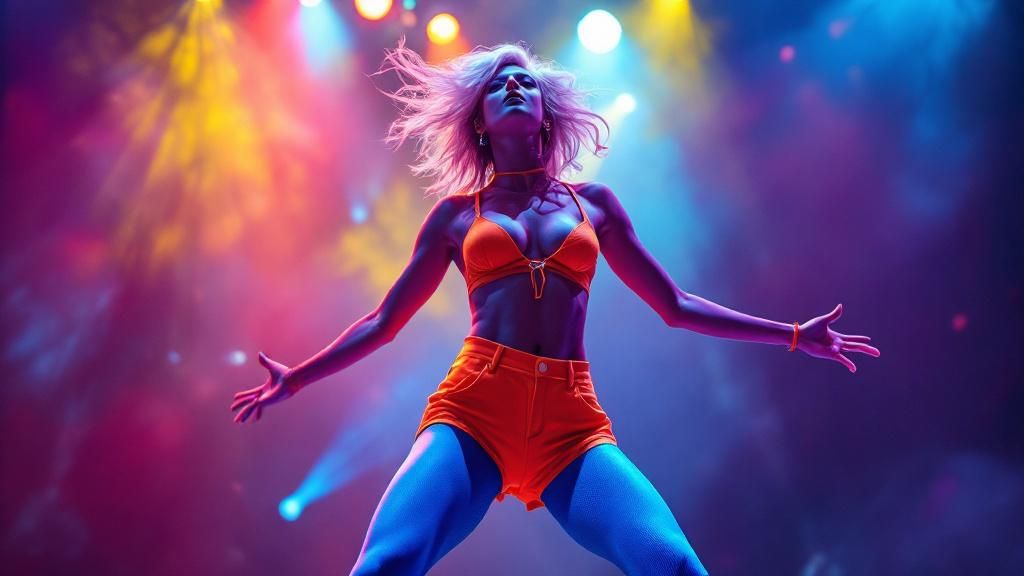
Swedish pop provocateur Zara Larsson has arrived at a critical juncture in her career, establishing herself as one of the globe’s leading artists whilst declining to sacrifice her principles. The 28-year-old vocalist, who famously walked away from a $3 million brand deal rather than abandon her principles, is enjoying remarkable worldwide acclaim in the wake of her fifth studio album, Midnight Sun, last September. With three songs currently in the US Hot 100 and a ranking as the fourth largest female performer across Spotify globally, Larsson has evolved from being a ten-year underground pop presence into a mainstream juggernaut. Discussing matters in Brooklyn during her viral-generating US theatre tour, she explores how she is managing fame, preserving her genuine self, and fighting against industry pressures that prioritise conformity ahead of creativity.
From Grassroots Pop Institution to Global Phenomenon
Larsson’s ascent to superstardom has been notably quick, most notably following the September launch of Midnight Sun. The album constitutes a radical reinvention of her artistic identity, transforming her into what she refers to as a “rave nymph” through a boldly exuberant fusion of brash electro-pop and drum’n’bass. The project’s visual identity—featuring dolphins and rainbows, rhinestones and lipgloss, lush florals and naked feet on green turf—has struck a chord with audiences worldwide. What makes this transformation especially compelling is Larsson’s unwillingness to regard pop music as the punishing toil it has become in the age of chart gamification and “stan wars.” Instead, she establishes herself as delivering uplifting relief, making the industry glow with genuine enthusiasm.
The momentum behind Larsson’s career has reached fever pitch in the past few months. A viral moment came when Olympic figure skater Alysa Liu’s routine to her collaboration with PinkPantheress on Stateside catapulted the track to number one on Billboard’s global charts. Larsson is presently the fourth largest female artist on global Spotify, behind only Taylor Swift, Olivia Dean and Raye. Her six-week US theatre tour has generated viral moments almost every night, thanks to her signature move of inviting fans on stage to dance to her 2015 breakthrough single Lush Life, which later climbed back up the charts. Yet in spite of this whirlwind success, Larsson remains grounded and future-focused, already setting her sights on bigger arena venues.
- Midnight Sun album transformed Larsson as an electronic and drum’n’bass artist
- Currently holds three songs in the US Hot 100 chart
- Fourth biggest female artist on worldwide Spotify streaming service
- Theatre tour generates viral moments by inviting fans to dance each night
The Nocturnal Luminary Transformation That Changed Everything
When Zara Larsson unveiled Midnight Sun in September, she did far more than simply put out another album—she radically reshaped her artistic direction. The project represented a clear break from her past output, championing a vibrant tapestry of electro-pop and drum’n’bass that felt at once retro and decidedly current. The album’s aesthetic is unapologetically maximalist: dolphins and rainbows, rhinestones and lipgloss, tropical flowers and bare feet on fresh grass. It’s the sound of a pop musician who has finally given herself permission to be fully, radically herself, rejecting the sterile professionalism that often marks modern pop music.
The reception has been truly extraordinary. Fans, who identify as Larssonists, have adopted the album’s philosophy of joyful escapism with real excitement. What makes this reinvention especially striking is Larsson’s resistance to treating pop as the gruelling, calculated labour it has become in an era of chart manipulation and algorithmic warfare. Instead, she presents herself as a champion of genuine fun—a dance floor visionary committed to make audiences feel alive. This genuineness has proven irresistible, elevating her from a decade-long underground fixture into among the globe’s leading pop artists almost overnight.
A Change in Artistic Philosophy
Larsson’s innovative approach represents a conscious departure from industry standardisation. Rather than pursuing trends or adapting her sound to demographic focus groups, she has adopted what she calls “radical authenticity”—a commitment to creative truth over commercial calculation. This mindset stretches beyond simple aesthetics; it’s a essential reorientation of how she conceives her role as a pop artist. She views her primary duty not as increasing streaming numbers or securing corporate partnerships, but as offering real escape and joy to her fanbase. This shift required courage, notably given the constraints that generally constrain female pop stars.
The transformation has also involved a conscious reframing of her engagement with fame itself. Larsson now approaches her career with a casual enjoyment that presents a marked departure from the perfectionist anxiety that often defines contemporary pop. She views performances as celebrations rather than obligations, inviting fans on stage to dance, fostering authentic connection rather than carefully choreographed spectacle. This perspective has proven deeply appealing with audiences tired of the manufactured nature of so much contemporary pop music, offering instead something that appears unscripted, energetic and authentically engaging.
- Midnight Sun album embodies deliberate refusal of commercial convention and trends
- Larsson prioritises creative integrity over profit-driven strategy and business collaborations
- New philosophy frames performances as celebrations of authentic rapport with listeners
Staying True on Fundamental Beliefs In Spite of Economic Sacrifice
Larsson’s dedication to authenticity has resulted in tangible consequences. Most notably, she turned down a lucrative $3 million brand deal when the partnership clashed with her values and artistic vision. Rather than expressing regret or bitterness about the decision, she has embraced it with characteristic defiance. “I lost a $3m brand deal. I was like: OK, losers!” she declares, her tone suggesting that compromising her principles would have been the real loss. This willingness to sacrifice substantial financial gain demonstrates that her embrace of radical authenticity is not merely performative—it reflects a genuine prioritization of integrity over wealth accumulation.
The decision demonstrates a broader philosophical stance about the nature of success in today’s pop scene. For Larsson, genuine connection with her fanbase and creative freedom matter far more than maximising corporate partnerships or commercial endorsements. This stance confronts the conventional expectation whereby female recording artists are required to profit from all dimensions of their reputation and commercial image. By declining high-value contracts that could undermine her artistic path, Larsson delivers a compelling signal: that certain values—in particular, one’s creative principles and vision—are beyond commercial value, regardless of the financial offer.
The Three Million Dollar Choice
The $3 million sponsorship refusal illustrates Larsson’s broader resistance to let business considerations shape her creative decisions. Rather than treating the foregone earnings as a setback, she positions it as freedom—escape from commitments that would have restricted her artistic output and forced her to portray a version of herself contrary to her current artistic vision. This choice emphasises a essential reality about her transformation: it is built on authentic belief rather than deliberate commercial calculation. The readiness to forgo such considerable payment demonstrates that her dedication to genuine self-expression is unconditional, not contingent on monetary benefit.
- Turned down a lucrative partnership to maintain artistic integrity and creative freedom
- Interprets monetary setback as liberation rather than disappointment or regret
- Demonstrates authentic commitment over strategic commercial calculation
- Places emphasis on genuine personal expression over brand alignment corporate requirements
Life as a Performance|Life Viewed as Performance|Life as Performance and the Cost of Fame
Larsson’s worldview that “life is a performance” captures her way of managing the relentless demands of contemporary celebrity. Rather than treating it as insincere performance, she champions performance as an authentic expression of her multifaceted identity. The distinction matters: she is not performing a false version of herself for commercial gain, but rather channelling different facets of her authentic self through the dramatic lens of popular music stardom. This refined comprehension allows her to maintain creative agency whilst acknowledging the inherent theatricality of fame itself. For Larsson, performance becomes a vehicle for emancipation rather than limitation.
The expense of fame in the modern era extends beyond the evident expenses of privacy and autonomy. It incorporates the constant pressure to capitalise on one’s brand, to align with brand partners whose values could differ with one’s own, and to deliver a sanitised image of oneself to international publics. Larsson’s readiness to decline significant monetary deals illustrates her understanding of fame’s true cost is measured not merely in pounds sterling, but in the erosion of creative autonomy and genuine personal expression. By declining offers that would jeopardise her artistic integrity, she reclaims agency over her own narrative and image, contending that some aspects of identity remain non-negotiable despite financial incentive.
Understanding Celebrity in the Streaming Age
The streaming era has fundamentally transformed how pop stars establish and sustain relevance. With algorithmic systems determining exposure and viral opportunities positioned to launch songs to worldwide success overnight, the conventional routes to stardom have been disrupted. Larsson’s ascent illustrates this emerging model: her rise wasn’t built on years of steady chart advancement but through the immediate, dramatic breakthrough of Midnight Sun, which resonated so powerfully with audiences that it fundamentally reshaped her career trajectory. The digital era rewards authenticity and distinctiveness precisely because listeners have infinite choice and consistently move toward artists who offer real, unvarnished creativity rather than formulaic content produced by group input.
Within this landscape, Larsson’s refusal to accept corporate partnerships becomes shrewd in approach as well as ethically grounded. Streaming platforms favour genuine interaction and real audience bonds; audiences can naturally sense when artists are compromising their vision for financial gain. By maintaining creative integrity, Larsson deepens her connection with listeners and enhances her algorithmic prominence through authentic passion and grassroots promotion. Her popular stage events, where fans dance on stage to “Lush Life,” create authentic online buzz that no advertising deal could produce. In the streaming age, authenticity is not merely principally correct—it is financially astute.
| Career Phase | Key Characteristic |
|---|---|
| Early Debut (Age 16) | Lovestruck ballads and traditional pop sensibility with “Uncover” |
| Underground Decade | Gradual chart presence without major commercial breakthrough or mainstream recognition |
| Midnight Sun Reinvention | Radical artistic pivot to electro-pop and drum’n’bass with rave-inspired aesthetic |
| Current Superstardom | Fourth biggest female artist globally on Spotify with viral cultural moments and arena aspirations |
What Lies Ahead for Pop’s Most Controversial Voice
With three songs concurrently ranking in the US Hot 100 and arena tours already on the horizon, Larsson finds herself at a critical juncture. The question isn’t whether she’ll sustain this momentum—her fanbase’s devotion indicates it’s essentially guaranteed—but rather how she’ll develop artistically without sacrificing the unvarnished joy that made Midnight Sun so compelling. Industry observers are paying close attention to see whether she’ll uphold her ethical position on corporate collaborations or whether the inevitable corporate overtures will prove irresistible. For now, Larsson seems genuinely unfazed by such considerations, apparently happy to let her creative work speak more powerfully than any sponsorship payment ever could.
Perhaps most strikingly, Larsson’s rise suggests a seismic change in how pop stardom operates in the streaming era. She’s shown that authenticity, unfiltered creativity and authentic engagement with fans can surpass the traditional apparatus of manufactured celebrity. As she transitions from theatres to arenas, the Swedish provocateur stands as proof that audiences are intensely craving for artists committed to placing integrity over paycheques. In an industry often defined by compromise, Larsson’s unwillingness to conform has become her greatest commercial asset—a paradox that might just reshape pop music’s future.
